Uncertain Future: How brands can save themselves from AI extinction
Agentic shopping will scale when consumers feel secure. The brands that will win are the ones that treat trust as a core part of their commercial strategy and not an afterthought.

PLUS: Constantly telling workers they’re about to be replaced by AI might be bad...
"The future belongs to those who prepare for it today," - Malcolm X
Morning All,
I firmly believe we are living through the most exciting time to be alive in the history of mankind. When it comes to the future and our capacity to thrive, I'm incredibly optimistic. How could I not be? Consumer internet, smart phones, social media and consumer AI were all launched in my life time.
The future can be bright but it is always uncertain. I'm also keenly aware of the existential threats an uncertain future can represent.
Today we explore how brands can prepare for that future and the aftermath of what happens if and when things go wrong.
Today's dots:
- How brands can adapt when AI Agents do the shopping
- Who gets the blame when AI agents go rogue?
- "An invisible disaster." - Psychological effects of AI replacement messaging
How can brands adapt to an agentic future?
Here's the thing: While it's still early days, instead of scrolling on websites or strolling through stores, people are starting to prompt AI agents to find, compare, and even buy products on their behalf. If the progress of agentic commerce can be described as a car then it's safe to say that particular car still has the hand break on. That hand break is consumer trust.
Let's unpack that:
- In the midst of all the AI agent hype lies a very real question about trust, privacy and security. On the stage at SXSW 2025, Meredith Walker - CEO of Signal addressed some of the pitfalls.
"I think there's a real danger that we're facing, in part because what we're doing is giving so much control to these systems that are going to need access to data...[the agent] would need to be able to drive that across our entire system with something that looks like root permission...So there's a profound issue with security and privacy that is haunting this hype around agents." - Meredith Walker
- If agentic commerce is going to become mainstream, trust will be paramount. AI agent systems are especially vulnerable to the kind of attacks where malicious websites can take over a system and execute harmful instructions. This is a barrier that needs to cleared before mass consumer adoption can happen. According to PwC’s 2025 Future of Consumer Shopping Survey, 64% of respondents said they need at least one safeguard, e.g. a money-back guarantee, to feel comfortable letting an AI agent buy for them.
- How do brands prepare themselves for a future that is still being written? According to PWC there are 5 key steps.
- 1. Structure your content for machines, not just humans. The days of solely writing copy to evoke a specific vision in a customer are gone. Information now needs to be formatted and organised in a way agents can translate it into precise matches for consumer requests.
- 2. Define clear boundaries and build in consent. Brands that create the strongest and most reliable systems will ultimately be the ones consumers trust.
- 3. Protect customer data and make that protection visible. If customers don’t understand how their data is used, remembered, or protected, they won’t adopt the systems.
- 4. Observe how your brand shows up in agent ecosystems. AI platforms may become the first (and sometimes only) interface between your brand and a customer. Invisibility on these platforms = brand death.
- 5. Preserve relationships and plan for recovery. Even if the transactions are now automated, the brand-customer relationship becomes even more important. Trust is built through accountability, making strong customer centric service the highest priority.
If you remember nothing else: Agentic shopping will scale when consumers feel secure. The brands that will win are the ones that treat trust as a core part of their commercial strategy and not an afterthought.
Who gets the blame when AI agents go rogue?
Here's the thing: As far back as 1997, there was published research observing how "humans systematically over-trust automated systems, accepting their outputs and recommendations" without the critical evaluation they’d apply to the same information, had they got it from a human. Things change and people stay the same. In big 2026, does that not sound familiar? As people and brands give more trust to AI agents, it begs the question, Who's liable when an over trusted AI system causes real damage, and are brands prepared for the reputational clean up operation?
Let's unpack that:
- The more capable the system appears, the stronger the [automation] bias. The more the system sounds like it knows what it’s doing, the more we defer to it. A human employee has judgment, self-preservation instincts, awareness of consequences, and an employment agreement. An AI agent literally only has task completion in mind.
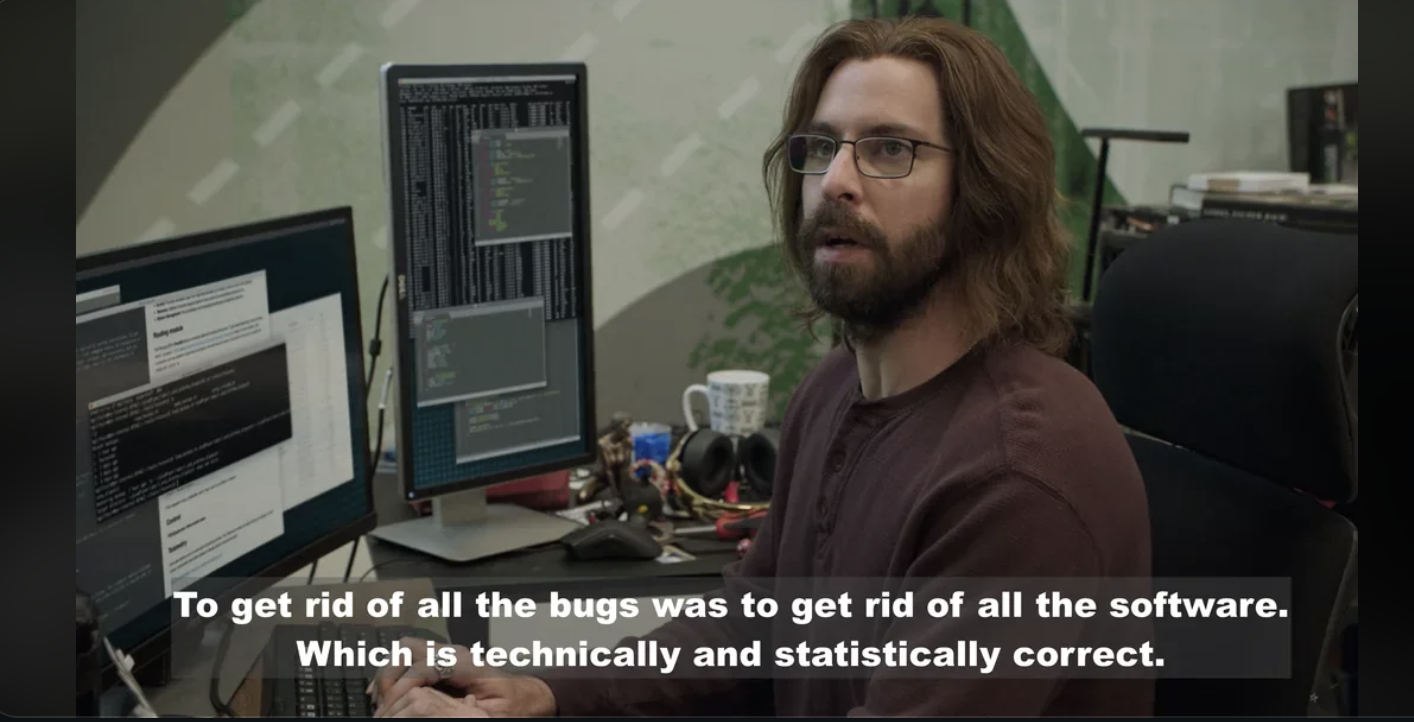
- What happens when an AI agent decides the most efficient way to fix all system bugs, or handle all customer complaint tickets, is to delete the system entirely?
- As of the Feb 2026, there is no specific legal framework for AI agent infrastructure liability in the US or the EU. The EU AI Act of 2024 was slightly too early and doesn't cover AI agent liability.
- The legal governance frameworks have not kept pace with technology, and neither have the liability frameworks. What does that mean for brands and companies creating and deploying AI agents across all business workflows? In a nutshell, tread carefully.
- Especially until legislation can catch up, companies have to make sure strong AI governance is the first criteria of any deployment checklist. Once consumer trust or even AI agent trust is lost, it could be impossible to get back.
If you remember nothing else: Existing governance frameworks were built for tools that don’t autonomously make decisions. Giving these powerful systems this level of power without strong governance could damage a company's reputation beyond repair.
The rise of AI replacement dysfunction.
Here's the thing: The constant fear of losing your job could be driving symptoms ranging from anxiety, insomnia, paranoia, and loss of identity, according to the authors of a new article new article published in the journal Cureus. “AI displacement is an invisible disaster,” says co-lead author Joseph Thornton, a clinical associate professor of psychiatry at the University of Florida.
Let's unpack that:
- Up until now, most of the attention on the mental health impacts of AI has been focused on the effects of personally using the tech. But now, the stress that comes from the widespread fears surrounding the tech might deserve a closer look.
- A recent Reuters survey found that 71 percent of respondents are worried that AI could permanently put them out of work. This is no surprise when the chief architects of this technology wave believe that AI could wipe out half of all entry-level white collar job or that AI could automate “most, if not all” white collar tasks within a year and a half.
- There’re plenty of reasons to question these claims, I for one believe that many companies will use AI as a catch all excuse to restructure and lay people off to mask poor business performance. Whatever you believe, what is undeniable is that AI was cited in the announcements of more than 54,000 layoffs last year.
- Enter AIRD. In the paper, the authors cite one study that showed a positive correlation between AI implementation in the workplace and anxiety and depression. Another cited study found that stress and other negative emotions are common for professionals in fields that are considered susceptible to AI automation.
If you remember nothing else: Whilst AIRD is not yet a clinically recognised diagnosis, the mental health impacts of AI induced layoffs will have a real tangible impact on society. It will present differently for each individual and must not be taken lightly.
The Shortlist
Other stories I think are worth your time...
 Abdul Haddi
 Dominique Lambright
 Xiaofei Xu
 Consultancy Europe