
Surface Scratching: AI adoption nowhere near full potential
We are still very early in the AI adoption and implementation cycle. Across all sectors the gap between actual use today and potential use is huge.

PLUS: How Amazon's AI experience is helping sellers grow
"Only Sith speak in absolutes." - Obi Wan Kenobi
Afternoon All,
AI hype is real. The gold rush is in full swing and many fortunes will be minted. Whenever the hype train is at full speed, you will inevitably find the grifters and charlatans aboard trying to convince you their way is the only way. AI is no different. Especially now with every tech bro from here to Palo Alto predicting what AI is going to be and do. As with anything the truth is usually found in the nuance.
In today's edition we try and cut through the hype and connect the dots from the Macro international impact of AI on jobs, right down to a day to day use case of how it's successfully being used to impact real businesses.
No absolutes or Sith Lords, just Jedi's armed with the facts.
Today's dots:
- Anthropic's Labour market impacts of AI report
- The compounding advantage of AI-first organisations
- How Amazon’s new AI experience helps sellers grow
Anthropic's Labour Impact Report.
Here's the thing: Everywhere you look you see predictions about how AI is going to impact or replace certain jobs. Rewind a few years and compare what people were saying then to the reality of today, maybe those predictions should come with a bit more humility. Anthropic's new impact report is their latest attempt to cut through the insane hype and accurately measure how AI is really affecting employment.
Let's unpack that:
- Many companies are using AI impact as political cover to justify restructuring decisions. AI may not be the driver but it's an easier sell than saying we made bad business decisions and now need to cut costs. As a result, AI's impact on the job market may not be obvious purely from looking at aggregate unemployment data. Factors like trade policy and the business cycle most definitely have a bigger impact than headlines would have you believe.
- How do you define whether a job is exposed to AI? According to Anthropic, a job's exposure is higher if:
- Its tasks are theoretically possible with AI
- Its tasks see significant usage in the Anthropic Economic Index
- Its tasks are performed in work-related contexts
- It has a relatively higher share of automated use patterns or API implementation
- Its AI-impacted tasks make up a larger share of the overall role
This essentially means when you break down all the day to day tasks each role performs, what proportion of that role can AI perform. The higher the proportion, the more exposed that role is. Teachers are considered less exposed than accountants or programmers for example. Why? Because AI can grade homework and create lesson plans, but can't manage a classroom.
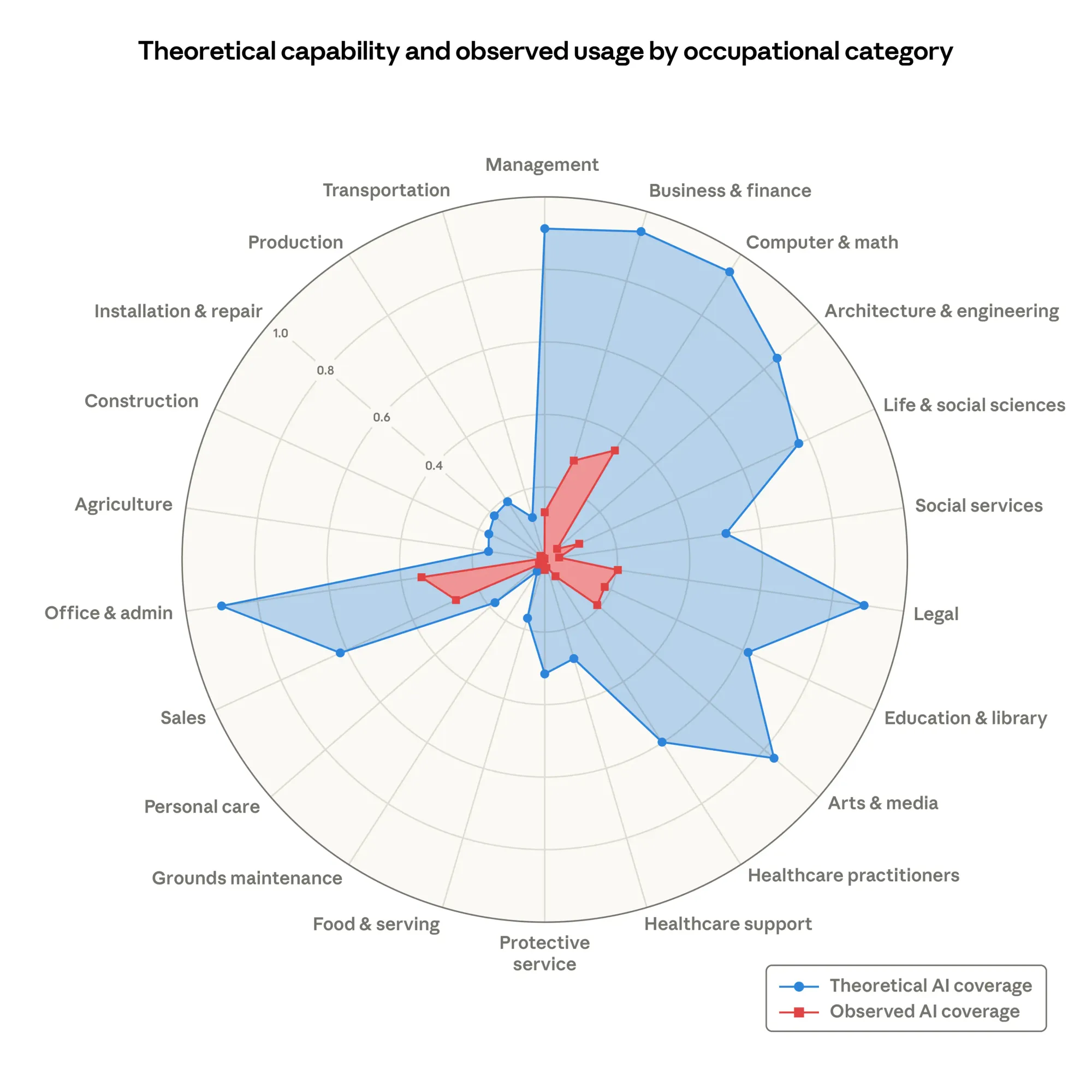
- So where are we today? The above graphic shows the gap between actual use today and theoretical capabilities. i.e. of the tasks that LLMs could theoretically speed up, which ones are people actually using them to complete. Going forward Anthropic believe that by tracking if and how that gap closes, it'll provide insight into the true job impact caused by AI.
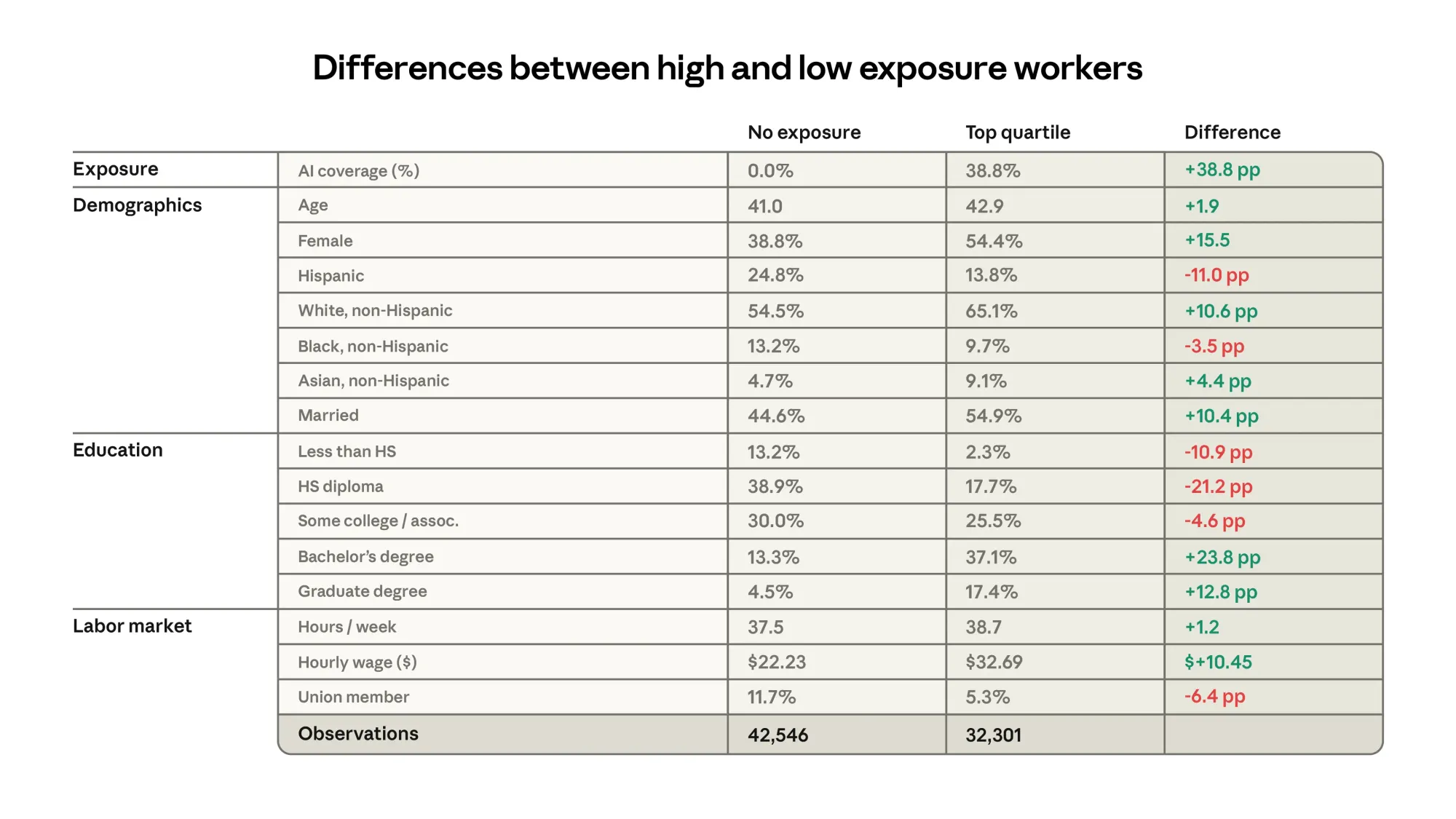
- As it stands, who's most exposed? Based on US data, The most exposed group across sectors are White, College educated, Women who are higher earners and non union members. The exposed group is 16 percentage points more likely to be female, 11 percentage points more likely to be white, they earn 47% more, on average, and have higher levels of education.
If you remember nothing else: AI hype is real but the current impact may not be. We are still very early in the AI adoption and implementation cycle. Across all sectors the gap between actual use today and potential use is still huge. But, that gap is closing fast and if it materialises, the impact will be huge. If all workers within the top 10% of potential exposure were laid off, the economic impact would be bigger than the 2007-2009 Great Recession.
The compounding advantage of AI first companies
Here's the thing: AI investment has hit $250B yet in a recent paper from the National Bureau of Economic Research , 90% of executives say AI has changed nothing in employment or productivity. Microsoft AI chief Mustafa Suleyman believes most tasks that involve "sitting down at a computer" will be fully automated by AI within the next year or 18 months. This seems like pie in the sky given that average corporate AI usage is currently 1.5 hours a week and 25% of companies don't use AI at all. As usual, beware anyone talking in absolutes as the truth is usually buried in the nuance.
Let's unpack that:
According to MIT approximately 95% of AI pilots fail to deliver any measurable ROI. There are a multiple reasons why including the fact a lot of knowledge work can't directly be tied back to the P&L. However, the main reason is most of these pilots aren't focused on the use cases where AI can add the most value. Poorly thought out AI pilots tend to share similar traits:
- No clear owner. AI tools get added to the stack, because that seems the sensible thing to do. We've already got Microsoft 365 so let's just switch on Copilot, right? But nobody owns the outcomes or is held accountable to ensure that is the best choice available.
- Data chaos. Customer information lives in multiple places. Transaction data in Stripe, contact details in HubSpot, years of reporting in Excel or multiple PDF's saved between Sharepoint and someone’s desktop. AI tools need clean, structured data to work properly. Garbage in, garbage out is one of the oldest maxims and AI systems have only amplified this.
- Unrealistic expectations. Teams expect AI to solve problems they haven’t even identified, or at least clearly defined. They attempt to buy into tools before understanding the process those tools should improve.
So what separates the 5% of companies doing it right from everyone else? Those organisations aren't experimenting with AI, they're rebuilding their operating model around it. AI has compressed maybe a decade of developments into just the last few years. It’s evolving fast. In 2020 you could use an LLM to write an email, in 2026 you can use one to code a fully functional app. Companies that are harnessing that power now are separating from the pack. In an exponential environment, being first becomes a structural advantage that is hard to reverse. And that advantage compounds.
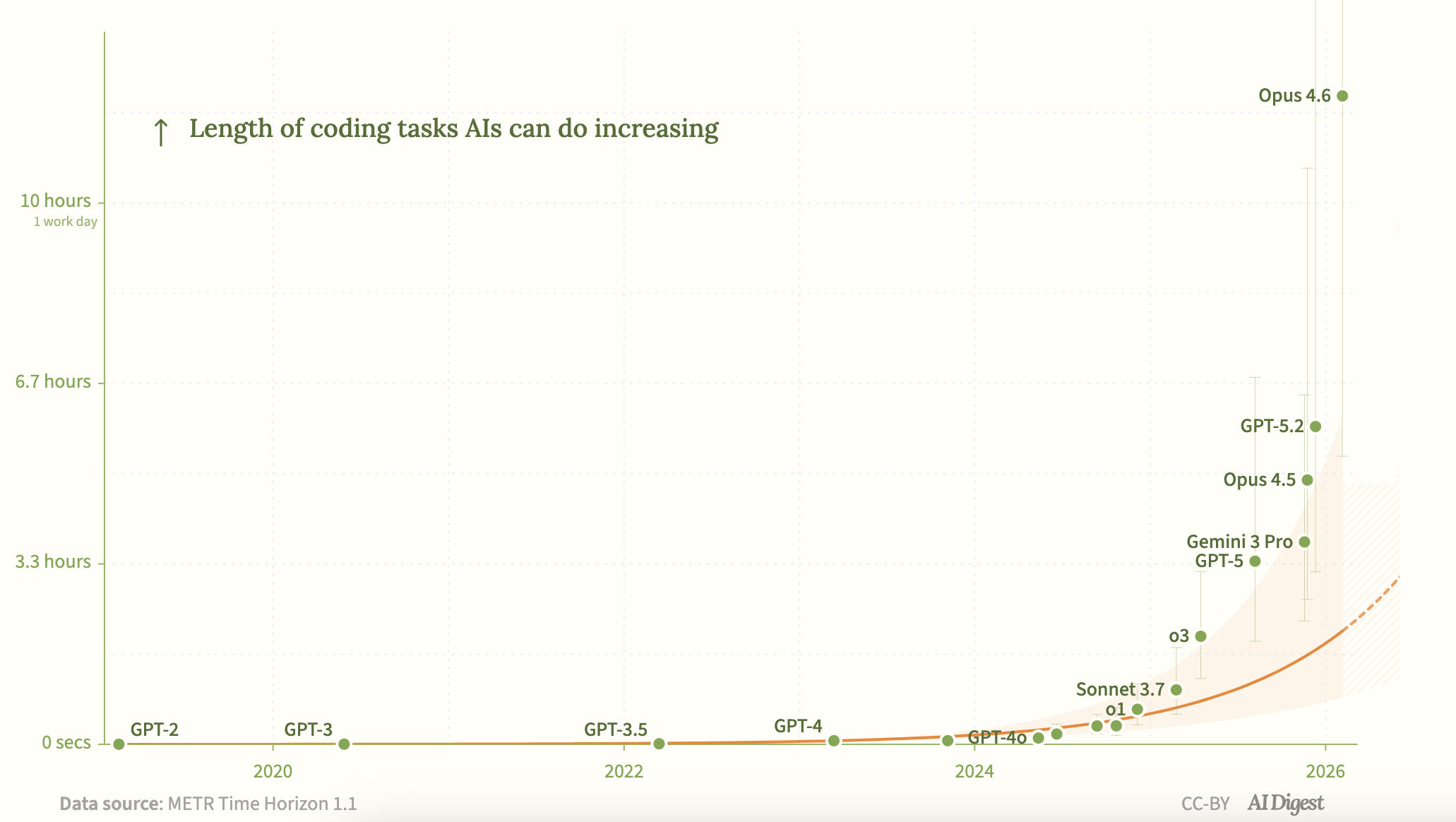
- AI-first companies aren't layering AI onto legacy workflows. They redesign the workflow itself. AI sits inside the work, not alongside it. Humans supervise, escalate and handle edge cases by design. Performance is measured in tangible terms: time, cost, quality, risk. The operating model is built to absorb new capability continuously. Before deploying AI, successful companies consolidate data sources and document core processes. It’s boring work, but it’s essential.
- The advantage is the ability to deploy intelligence quickly, safely and repeatedly at scale to do work that matters. That requires redesigned processes, clean data foundations, clear accountability and a culture that treats AI as permanent infrastructure rather than a box ticking initiative.
If you remember nothing else: AI can be transformative and impactful but only if implemented intelligently. Starting now and not someday, ask yourself are you building the personal and organisational capability to adopt it effectively. Doing so successfully will create an enormous advantage over your competition who are kicking the can down the road.
Amazon's new AI canvas for Sellers
Here's the thing: Amazon is introducing a canvas experience in Seller Central that integrates AI-powered chat with dynamic, personalised visuals. Sellers are now able to visualise data and key insights, explore scenarios, and take critical actions to grow their business.
Let's unpack that:
- Amazon’s platform has been collecting and aggregating data for decades. Now they're harnessing that power to transform how sellers run their businesses. Merchants can now take advantage of AI-powered product listing, content creation, and lifestyle imagery creation with significantly less effort.
- Amazon's Seller Assistant has recently been given agentic AI capabilities enabling it to not just respond to sellers, but to reason, plan, and take action on their behalf. Sellers now accept Seller Assistant’s recommendations nearly 90% of the time, saving them time and effort.
- Sellers can dig deeper by asking follow-up questions or requesting different perspectives on the data. Whether it's analysing inventory levels, exploring customer traffic trends, testing scenarios for peak selling periods, or diving deeper into growth opportunities, the canvas generates new visualisations to help them explore further and spot opportunities they might have missed.
- Every retailer is faced with replenishment queries on a daily/weekly basis. Rather than simply providing a list, the canvas analyses each seller’s unique business situation and offers multiple paths forward: restock now, delay to gauge demand, or discount excess inventory. It clearly shows the projected impact of each option on revenue, cash flow, out of stock risk, storage fees, and competitive positioning.
If you remember nothing else: Today, more than 60% of sales in Amazon's store come from independent sellers -most of them small and medium-sized businesses. Amazon's new canvas will give these sellers capabilities they previously couldn't afford. The canvas will guide merchants through increasingly complex scenarios - like planning product launches or optimising marketing investments and help them make decisions with confidence.
The Shortlist
Other stories I think are worth your time...


 Pallabi Chatterjee
 Sheryl Estrada
 Jackie Seddon
 EBM ADMIN Team