Connect The Dots
"Only Sith speak in absolutes." - Obi Wan Kenobi Afternoon All, AI hype is real. The gold rush is in full swing and many fortunes will be minted. Whenever the hype train is at full speed, you will inevitably find the grifters and charlatans aboard trying to convince you their way is the only way. AI is no different. Especially now with every tech bro from here to Palo Alto predicting what AI is going to be and do. As with anything the truth is usually found in the nuance. In today's edition we try and cut through the hype and connect the dots from the Macro international impact of AI on jobs, right down to a day to day use case of how it's successfully being used to impact real businesses. No absolutes or Sith Lords, just Jedi's armed with the facts. Today's dots:
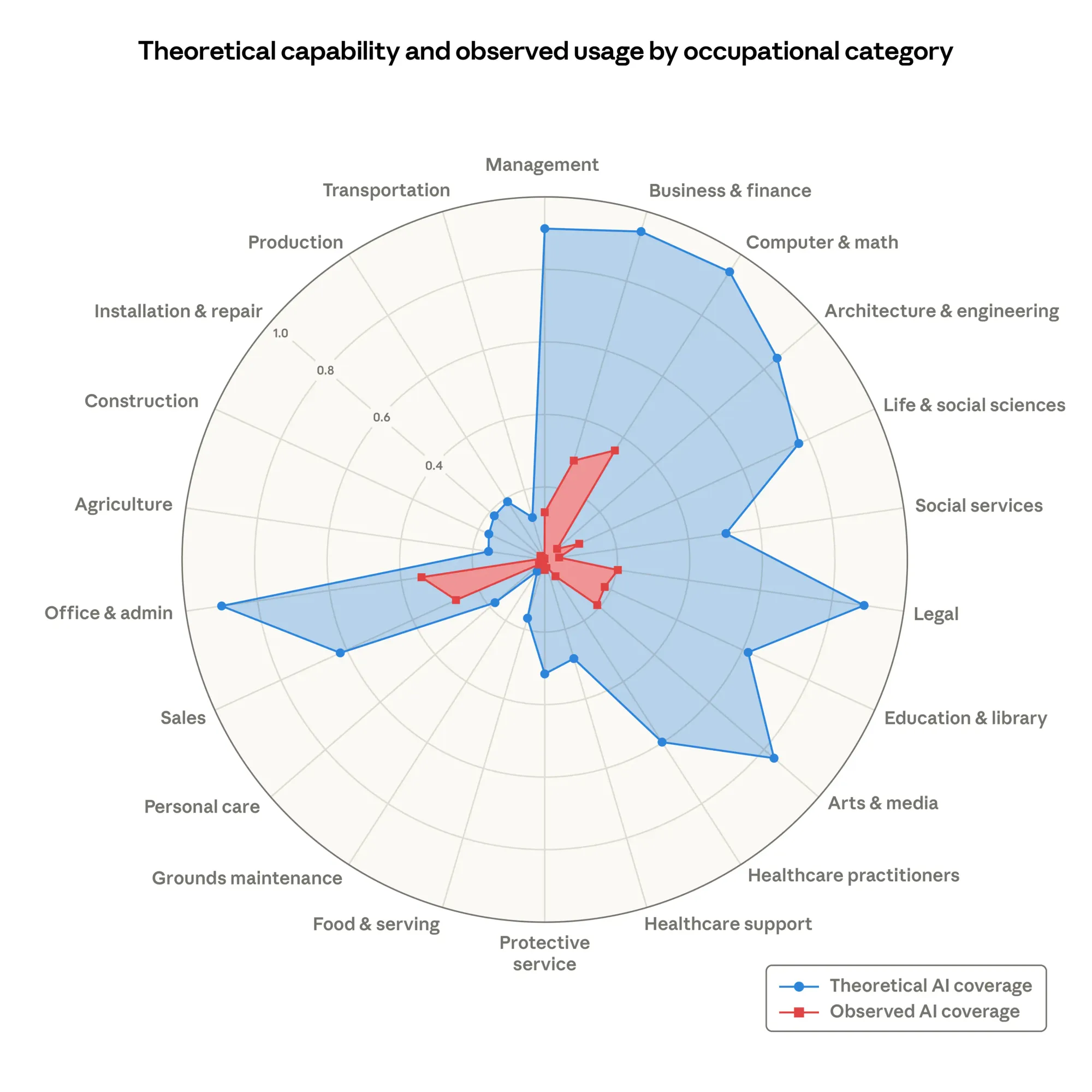
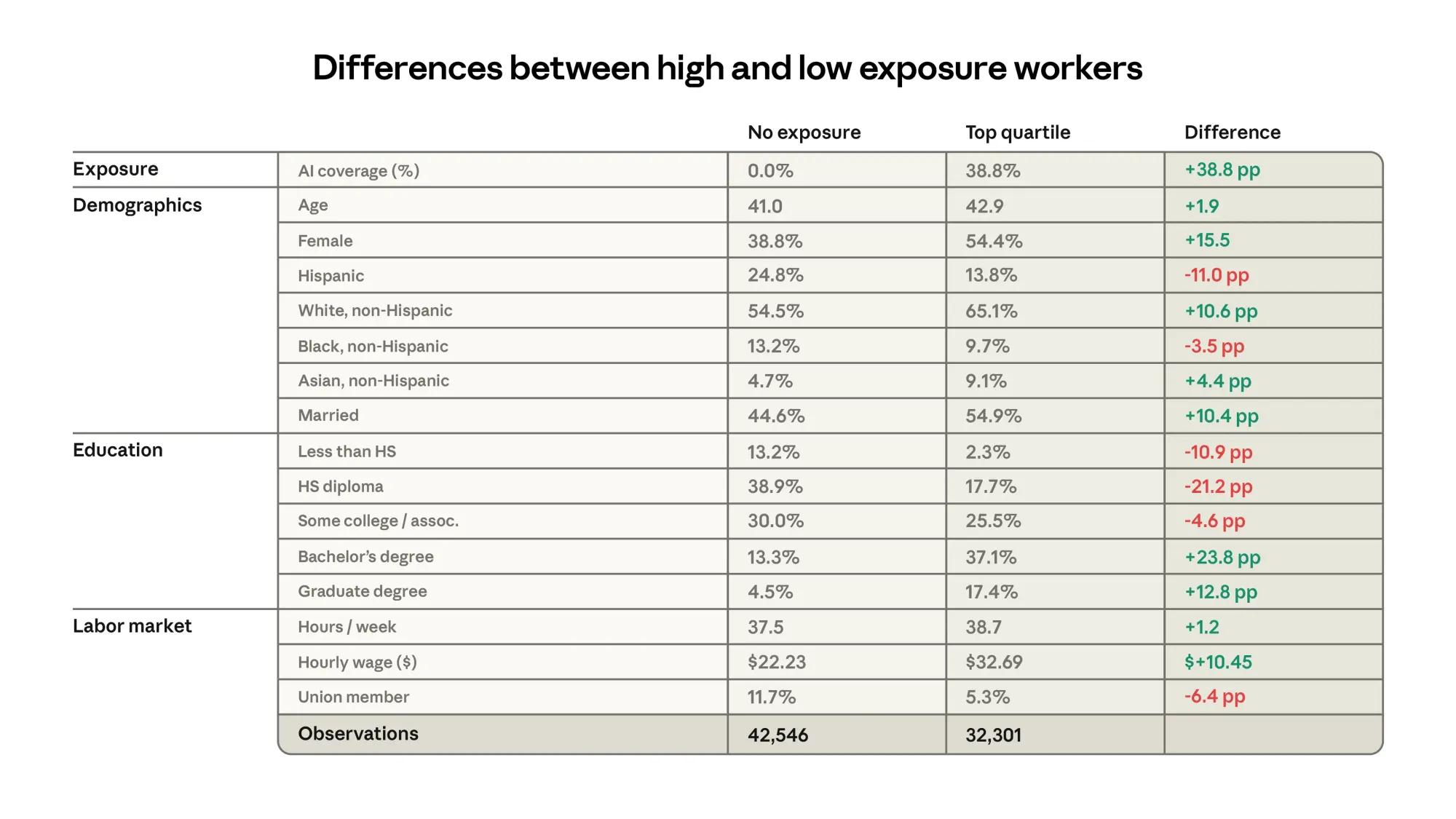
Anthropic's Labour Impact Report.Here's the thing: Everywhere you look you see predictions about how AI is going to impact or replace certain jobs. Rewind a few years and compare what people were saying then to the reality of today, maybe those predictions should come with a bit more humility. Anthropic's new impact report is their latest attempt to cut through the insane hype and accurately measure how AI is really affecting employment. Let's unpack that:
This essentially means when you break down all the day to day tasks each role performs, what proportion of that role can AI perform. The higher the proportion, the more exposed that role is. Teachers are considered less exposed than accountants or programmers for example. Why? Because AI can grade homework and create lesson plans, but can't manage a classroom.
If you remember nothing else: AI hype is real but the current impact may not be. We are still very early in the AI adoption and implementation cycle. Across all sectors the gap between actual use today and potential use is still huge. But, that gap is closing fast and if it materialises, the impact will be huge. If all workers within the top 10% of potential exposure were laid off, the economic impact would be bigger than the 2007-2009 Great Recession. The compounding advantage of AI first companiesHere's the thing: AI investment has hit $250B yet in a recent paper from the National Bureau of Economic Research , 90% of executives say AI has changed nothing in employment or productivity. Microsoft AI chief Mustafa Suleyman believes most tasks that involve "sitting down at a computer" will be fully automated by AI within the next year or 18 months. This seems like pie in the sky given that average corporate AI usage is currently 1.5 hours a week and 25% of companies don't use AI at all. As usual, beware anyone talking in absolutes as the truth is usually buried in the nuance. Let's unpack that: According to MIT approximately 95% of AI pilots fail to deliver any measurable ROI. There are a multiple reasons why including the fact a lot of knowledge work can't directly be tied back to the P&L. However, the main reason is most of these pilots aren't focused on the use cases where AI can add the most value. Poorly thought out AI pilots tend to share similar traits:
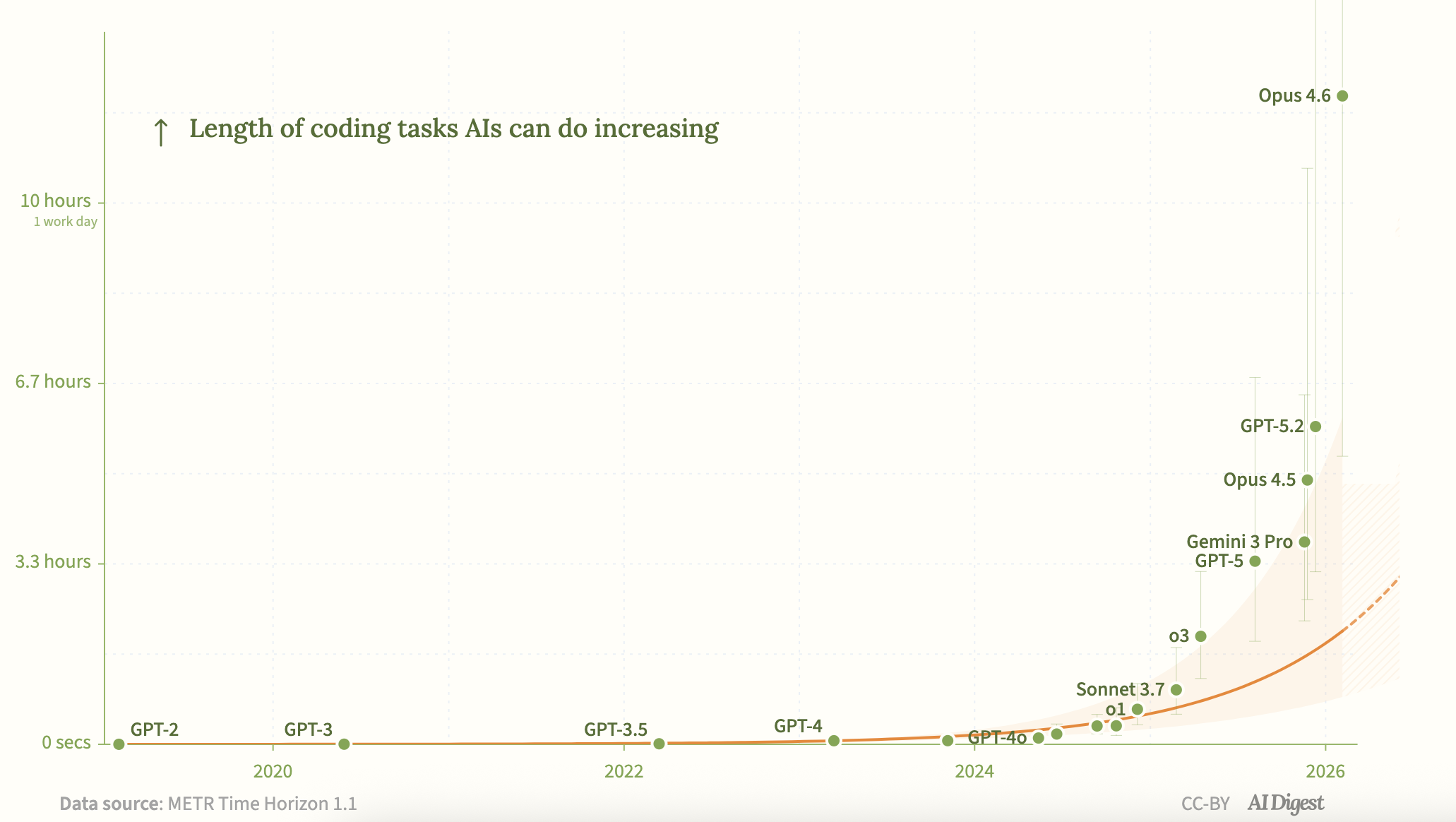
So what separates the 5% of companies doing it right from everyone else? Those organisations aren't experimenting with AI, they're rebuilding their operating model around it. AI has compressed maybe a decade of developments into just the last few years. It’s evolving fast. In 2020 you could use an LLM to write an email, in 2026 you can use one to code a fully functional app. Companies that are harnessing that power now are separating from the pack. In an exponential environment, being first becomes a structural advantage that is hard to reverse. And that advantage compounds.
If you remember nothing else: AI can be transformative and impactful but only if implemented intelligently. Starting now and not someday, ask yourself are you building the personal and organisational capability to adopt it effectively. Doing so successfully will create an enormous advantage over your competition who are kicking the can down the road. Amazon's new AI canvas for SellersHere's the thing: Amazon is introducing a canvas experience in Seller Central that integrates AI-powered chat with dynamic, personalised visuals. Sellers are now able to visualise data and key insights, explore scenarios, and take critical actions to grow their business. Let's unpack that:
If you remember nothing else: Today, more than 60% of sales in Amazon's store come from independent sellers -most of them small and medium-sized businesses. Amazon's new canvas will give these sellers capabilities they previously couldn't afford. The canvas will guide merchants through increasingly complex scenarios - like planning product launches or optimising marketing investments and help them make decisions with confidence. |