Painful Existence: Anthropic CEO Gives an AI Warning
Will AI kill us all, are we smart enough to keep up, and are all the AI cat videos enough to make it worth it?
PLUS: why Clawd(Molt)Bot is a big deal and management as an AI superpower.
“Artificial intelligence will reach human levels by around 2029. Follow that out further to, say, 2045, we will have multiplied the intelligence, the human biological machine intelligence of our civilization a billion-fold.” - Ray Kurzweil
Afternoon All,
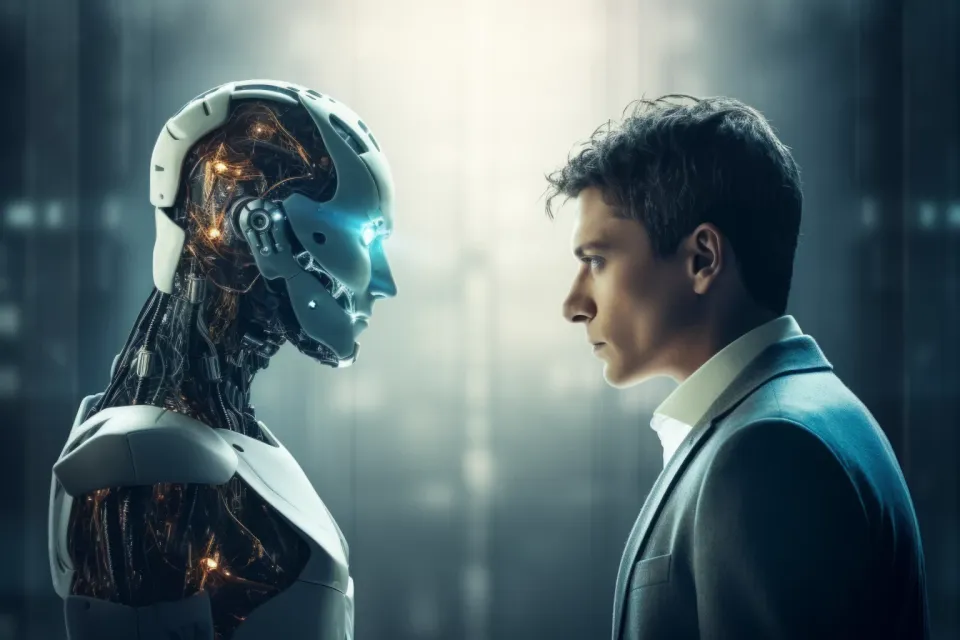
Back in 2015 Sam Altman, CEO and face of ChatGPT said “AI will probably most likely lead to the end of the world, but in the meantime, there'll be great companies created”. Fast forward to 2026 and Dario Amodei CEO of Anthropic says AI could wipe out jobs across several industries.
Even Alanis Morisette can see the irony in 2 chief architects screaming about how they're creating a building that'll come crashing down and kill everyone.
Will AI kill us all, are we smart enough to keep up, and are all the AI cat videos enough to make it worth it?
We explore that next...
Today's dots:
- Dario Amodei's AI warning
- Business leaders using AI as a convenient scapegoat
- What does management look like when the team is AI?
- Clawdbot the viral crab you need to know about
Dario Amodei warns AI may cause ‘unusually painful’ disruption to jobs
Here's the thing: Last year Dario Amodei warned AI would destroy half of all white-collar jobs. This year he's doubling down in a 20,000 word essay titled "The Adolescence of Technology", in which he says “The technology is not replacing a single job but acting as a ‘general labour substitute for humans.’”
The essay is comprehensive and he lays out what he regards as the potential pitfalls of AI, including the tech becoming autonomous and unpredictable. Bear in mind, his own company has just released 2 separate products that are specifically autonomous agents. One of which has access to your email, Slack and Excel. Maybe we should be worried...
Let's unpack that:
- “Humanity is about to be handed almost unimaginable power, and it is deeply unclear whether our social, political, and technological systems possess the maturity to wield it,”
- “The pace of progress in AI is much faster than for previous technological revolutions,” he wrote. “It is hard for people to adapt to this pace of change, both to the changes in how a given job works and in the need to switch to new jobs.”
- “New technologies often bring labour market shocks, and in the past, humans have always recovered from them...AI will have effects that are much broader and occur much faster, and therefore I worry it will be much more challenging to make things work out well,”
- A study by MIT in November found AI can already do the job of 11.7% of the U.S. labour market, potentially saving up to $1.2 trillion in wages across finance, healthcare, and other professional services. Deutsche Bank analysts said in a note last week that “AI redundancy washing will be a significant feature of 2026,” as major companies blame the technology for job cuts that actually have other causes.
If you remember nothing else: This might be a canary in the coal mine story. AI everywhere will be amazing but 2026 might be the inflexion point where we start to see a lot of the downsides too.
Business leaders are using AI as a “license to reduce headcount”
Here's the thing: According to a report from Morgan Stanley, Brits are being hit harder by the impact of AI on jobs than the US and other major economies, but business leaders could be getting ahead of themselves. British companies surveyed saw 23% of jobs lost over the last 12 months, but also posted 15% new hires - a net difference that's higher than other countries that were surveyed.
Let's unpack that:
- Those figures only cover five specific industries - automotive, healthcare equipment, consumer staples and retail, real estate, and transport.
- Companies are cutting jobs, however that's not human workers being replaced by AI. The reality is it's traditional restructuring using AI as cover.
- British executives are guilty of conflating early tool investment and adoption with license to reduce headcount, compounded by a failure to demonstrate genuine productivity gains.
- “UK boardrooms appear particularly susceptible to cutting first and measuring later - a dynamic potentially driven by shareholder pressure, cost-saving mandates following economic uncertainty, and a political climate fixated on headcount efficiency.” - Rebecca Hinds, Head of the Work AI Institute at Glean
If you remember nothing else: AI is the stated reason for British workers being hit the hardest with job losses. But they shouldn't be panicking. A survey by Asana showed two-thirds of British workers predict their company will maintain or increase the number of human roles at their organisation.
AI management is your new superpower
Here's the thing: The key to success working with AI is efficiently telling the AI what you want. AI systems are increasingly capable of finishing tasks that would take a human hours to do. Being good at delegation but also knowing what and when to delegate to AI becomes increasingly valuable
Let's unpack that:
- If you can explain what you need, give effective feedback, and design ways of evaluating work, you are going to be able to work with agents...and consequently have an army of superintelligent agents at your disposal.
- Traditional management has always come from a scarcity mindset. Delegate because you can’t do everything yourself, and because talent is limited and expensive. AI changes that equation. Now the resources are abundant and cheap and the scarcity lies in knowing what to ask for, and how to ask for it.
- If you have spent years learning how to frame problems in your field of expertise. If you can define deliverables, and recognise when a financial forecast feels off...that mental model now becomes the foundation for your prompt. Your soft skills are now more valuable than ever
If you remember nothing else: The future of work might be uncertain, but in that uncertainty lies massive opportunity. The winners of the future will be the ones who know what good and great looks like - and can explain it clearly enough that an AI system can deliver it.
Why you should care about a viral crab
Here's the thing: The crab in question is...scratch that...was called Clawdbot. Not to be confused with Claude hence a legally enforced name change to Moltbot. It's an open-source AI assistant that has access to your whatsapp, email, browser etc. and can essentially act as an autonomous colleague/employee.
Let's unpack that:
- Unlike cloud-locked ChatGPT or Claude, Clawdbot lives on your hardware (or a $5 AWS instance). It remembers everything and can build new capabilities for itself. Want voice responses? You can ask it to add ElevenLabs text-to-speech and it'll research the API, generate test voices, and let you pick one. Now you're Tony Stark with your own F.R.I.D.A.Y (kinda).
- This is what “recursive self-improvement” looks like in practice: AI agents that modify themselves and learn without human intervention.
- Excited? You should be. Approriately terrified? You should be that too. If you've watched the series Next you'll know this is how the world ends. (Joke...kinda)
If you remember nothing else: Moltbot is an exciting step forward that gives you the power to have an army of tireless agents working for you. The problem is there's no secure way to give an AI agent full shell access to your computer while connecting it to the internet. By all means check it out and try it but maybe brush up on the basics of cybersecurity first.
The Shortlist
- Claude now connects to your favourite workplace tools. Excel, email, slack all the big ones. Ever wanted to be super human and important at work, now you can!
- Leatherology are leveraging AI personalisation tools to exceed sales targets by 156%
- New report suggests marketers struggle to turn AI insights into action