AI Lifeline: Early Cancer Detection Delivered to Underserved
AI will be the biggest transformative development ever to hit the human race. Bigger than electricity. Even bigger than the internet. The spectrum of possible outcomes spans utopia on one side, and dystopian hellscape on the other.
PLUS: SaaS stocks tumble 15% as OpenAI hits $20B and consulting demand is now steered by AI
“The sole advantage of power is the ability to do more good.” - Baltasar Gracian, author of The Art of Worldly Wisdom
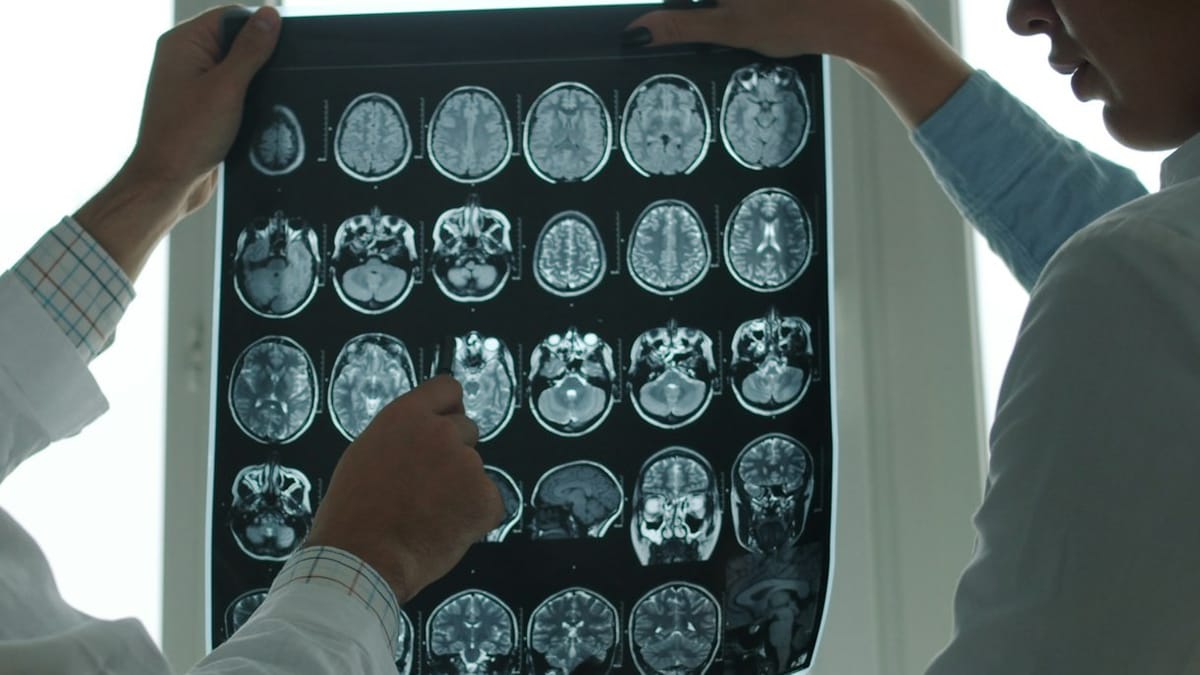
Afternoon All, AI will be the biggest transformative development ever to hit the human race. Bigger than electricity. Even bigger than the internet. The spectrum of possible outcomes spans utopia on one side, and dystopian hellscape on the other. Where we eventually land on that spectrum all depends on decisions made by those with the power to shape the course of history. To that end, I loved reading that Microsoft and Bristol Myers Squibb are taking us closer to utopia. Their new partnership will deploy AI cancer detection tools to underserved communities, bringing early diagnosis capabilities to hospitals lacking specialist resources.
This is more evidence of AI's growing role in democratising healthcare and the far reaching benefits this could have. Now we know it's possible, the only question is how quickly can these life-saving technologies be scaled to combat systemic healthcare disparities?
Today's dots:
- AI cancer detection expands to underserved clinics
- Consulting priorities shift from sustainability to AI
- OpenAI hits $20B revenue as SaaS stocks tumble
- AI hardware crunch sparks memory gold rush
- ServiceNow embeds OpenAI agents in enterprise workflows
AI-Powered Cancer Detection Hits Clinics
Here's the thing: Microsoft and Bristol Myers Squibb just partnered to deploy AI that spots early-stage lung cancer in X-rays and CT scans, prioritising rural and underserved US communities. Announcement
Let's unpack that:
- The system uses FDA-cleared AI algorithms via Microsoft's Precision Imaging Network, letting clinicians identify hard-to-see lung nodules at earlier stages when treatments are often more effective.
- A core goal is bridging the healthcare gap: the tech’s rolling out first to severely underserved rural hospitals and community clinics lacking specialist resources.
- The AI workflow doesn’t just flag anomalies. It guides patients to precision therapies faster, acting like a ‘digital oncology navigator’ embedded in routine scans.
- Big Pharma’s betting big: This follows AstraZeneca’s acquisition of Modella AI last week and Eli Lilly-Nvidia’s $1B joint lab. AI is now central to both drug discovery and patient diagnostics.
If you remember nothing else: Early detection could save 45k+ lives annually in the US alone. When scaled, partnerships like this prove AI isn’t just about automation, efficiency and cost cutting. Deployed correctly it has the power to deliver life-saving care where it’s needed most and to people who have previously been excluded.
AI Consulting Demand Overtakes Sustainability in Major Industry Shift
Here's the thing: Artificial intelligence has dethroned sustainability as the #1 reason companies seek consulting help for the first time in five years, with 76% of UK consultancies prioritising AI investments according to a Management Consultancies Association survey.
Let's unpack that:
- Consulting revenues are projected to grow 5.7% this year and 7.4% in 2027 as businesses scramble for AI implementation support
- This ends sustainability's five-year reign as the top consulting driver - only 10% of firms now see it as a key growth area versus 76% betting on AI
- Consultants themselves are accelerating AI adoption, with 76% now using it for research vs 67% last year
- The rapid shift brings challenges: over half of firms worry clients won't pay for new tech/training costs amid economic uncertainties
- Hybrid work tensions persist - 60% of consultants want more office time for better team development
If you remember nothing else: AI's consulting dominance signals a fundamental shift in corporate priorities as leaders bet big on automation. This creates both opportunities for efficiency gains but also new pressure points. Whether they like it or not, businesses will need to balance tech adoption with the human impact of the inevitable company reorgs.
OpenAI's $20B Growth Fuels AI Gold Rush as SaaS Stocks Tumble
Here's the thing: OpenAI just revealed it hit $20B in annual revenue with 233% growth - while SaaS stocks plunged 15% as AI threatens traditional software models.
Let's unpack that:
- That $20B revenue represents 10X growth since 2023 - from $2B to $6B to $20B+ - faster than any comparable tech company in history (OpenAI)
- The meteoric rise comes with sky-high costs: analysts project a $17B cash burn in 2026, consuming 85% of revenue just to power GPUs (Benzinga)
- New benchmarks show GPT-5.2 now matches human experts on first drafts 72% of the time - making AI delegation viable for core workflows (Ethan Mollick's analysis)
- Professionals now build hyper-specific 'micro-apps' instead of buying subscriptions - like a designer creating a viral advent calendar with $230 in AI tools (TechCrunch)
- Hardware breakthroughs could flip economics again: NVIDIA's $20B Groq deal promises 15X faster inference than current GPUs (CNBC)
If you remember nothing else: Today's AI prices are subsidised growth plays, not sustainable economics. It is hard to ignore the growing number of people who believe AI is a bubble. There are even some who believe OpenAI could go bankrupt in 18 months. Wherever you personally sit, it's undeniable the productivity gains are real. Businesses paying thousands monthly clearly see returns you couldn't have imagined two years ago.
AI's Memory Crunch Sparks Hardware Gold Rush
Here's the thing: Surging AI adoption has created a critical memory bottleneck, with DRAM prices rocketing 93-98% last quarter. AI datacenters are projected to takeup 70% of the worlds RAM capacity. Consequently making chipmakers like Samsung and Micron hot investments as demand is forecasted to outstrip supply through 2027.
Let's unpack that:
- AI's shift from training to real-world applications is exploding memory needs, especially for ‘agentic’ AI that operates independently. Morgan Stanley analysts call this an “unusually long” capacity crisis.
- DRAM leaders Samsung (+18% upside), Micron (+5%) and SK Hynix (+12%) dominate the $177B AI memory market, with prices expected to climb further through 2026 (source material data).
- Legacy memory suppliers like Winbond could see windfalls as older DDR4 chips, still vital for many systems, face potential 98% quarterly price hikes.
- Advanced packaging firm Disco (+24% upside) and semicap leader Applied Materials are winning big from the scramble to build high-bandwidth memory (HBM) for AI chips. It’s part of a wider compute crunch OpenAI calls the “scarcest resource in AI.”
- ASML, Europe’s €990B chip equipment king, holds a monopoly on extreme ultraviolet (EUV) tech for cutting-edge semiconductors, analysts see 21.8% upside.
If you remember nothing else: AI’s explosive growth is hitting physical limits. During the first gold rush the ones who got rich were the ones selling the shovels. In the AI gold rush hardware bottlenecks now dictate which companies thrive, and those building memory infrastructure could be the big winners until at least 2027.
ServiceNow locks in OpenAI for enterprise AI revolution
Here's the thing: OpenAI and ServiceNow just signed a three-year deal to embed ChatGPT-powered AI agents directly into enterprise workflows like autonomous IT support and customer service tools.
Let's unpack that:
- ServiceNow will deploy OpenAI's speech recognition models to create AI voice agents that handle customer service calls independently - potentially resolving tier-1 queries without human intervention
- The computer-use AI models can perform IT tasks like rebooting systems and extracting legacy data, automating what were previously manual processes across outdated infrastructure
- ServiceNow's revenue commitment signals enterprises view embedded AI agents as essential rather than experimental - they're buying outcomes, not just technology
- This follows Salesforce and SAP's recent moves, turning enterprise software into an AI agent battleground where workflow automation becomes the core value proposition
- The tech coincides with a 22% drop in IT hiring since 2023 as companies replace repeatable tasks with AI agents that work 24/7
If you remember nothing else: Autonomous AI is moving from demo wonder to enterprise workhorse. The companies winning here aren't just selling smarter software - they're reshaping how entire departments operate by baking intelligence into daily workflows.
The Shortlist
Energy costs will determine AI leadership according to Microsoft's Satya Nadella at Davos. The Microsoft CEO warned that regions with high electricity prices face competitive disadvantages in running AI inference workloads.
AI impacted 55,000 US jobs in 2025 per new data, with IMF's Kristalina Georgieva describing the labour market shock as 'tsunami-like'. 40% of workers now fear AI-driven displacement versus 28% in 2024.
56% reported zero ROI from AI investments according to PwC's CEO survey of 4,454 leaders. Only 12% saw both cost savings and revenue growth, despite 76% of consultancies prioritising AI spending.
UK regulators were warned by Parliament's Treasury Committee about their 'wait-and-see' approach to financial AI risks. MPs urged immediate stress tests for AI-driven market shocks and clearer accountability frameworks.
Ukraine announced plans to share combat data from its 4-year conflict with allies to train military AI models. The dataset includes millions of hours of drone footage and tactical decision records from frontline units.